Confined Spaces, Chemical Processing and High-Hazard Environments: Choosing the Right Respirator When the Stakes Are Highest
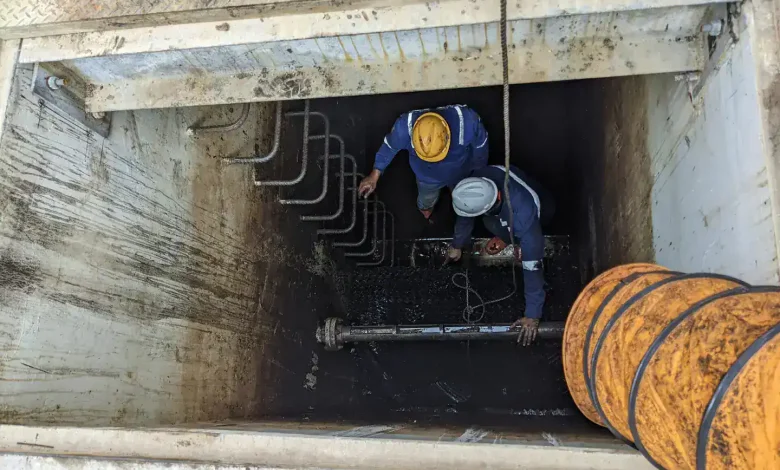
There are workplace environments where the difference between the right respiratory protection and the wrong one is not measured in percentage points of additional hazard exposure. It is measured in whether a worker goes home. Confined spaces with oxygen-deficient atmospheres. Chemical processing areas where a valve failure can produce instantly dangerous gas concentrations. Lead smelting operations. Remediation of sites contaminated with acutely toxic substances.
In these environments, the respiratory protection decision is not a matter of selecting the most practical device from a range of broadly adequate options. It is a matter of identifying the only device category that provides sufficient protection, and then ensuring that device is used correctly and maintained reliably.
Australian workplaces across chemical processing, resources extraction, heavy manufacturing, remediation, and confined space entry operations face respiratory hazards that sit at the highest end of the severity spectrum. Understanding how positive pressure respirators, full face respirators, and half face devices relate to these environments, and where the limits of each category lie, is knowledge that directly determines whether workers are genuinely protected.
The Chemical Processing Challenge: Multiple Hazards, Variable Concentrations
A chemical processing facility presents a respiratory protection challenge that differs fundamentally from a dusty construction site or a welding shop. The hazards are chemical vapours and gases rather than particles. Their concentrations can change rapidly and unpredictably. Some have physiological effects at parts-per-million concentrations that create immediate life-threatening conditions rather than long-term accumulated exposure effects.
The Australian Workplace Exposure Standards (WES) published by Safe Work Australia define two types of limits for airborne chemical hazards:
Time-weighted average (TWA) exposure standards represent the average concentration that most workers can be exposed to across an eight-hour working day without adverse health effects. These are the limits that routine respiratory protection programs are designed to maintain compliance with.
Short-term exposure limits (STELs) are maximum concentrations that workers should not be exposed to for more than 15 minutes, regardless of the daily TWA. Some STELs are set for chemicals whose acute toxicity at high concentrations creates risks that are distinct from chronic low-concentration exposure.
For chemicals with both a TWA and a STEL, the respiratory protection program must account for both. A device that is adequate for the typical ambient concentration may be insufficient during a process upset, a maintenance activity, or a sampling task that produces short-term peak exposures approaching or exceeding the STEL.
The correct response to chemical processing environments with variable or potentially high concentrations is not to assume the worst-case concentration all the time and specify maximum protection for all tasks. It is to understand the concentration profile of the specific area and the specific tasks, and to match the device category to the concentration range that workers will actually encounter.
Full Face Respirators: The Right Tool for Chemical Vapour and Combined Hazards
For chemical processing environments where the hazard is gas or vapour at concentrations within the range addressable by air-purifying technology, and where the substance presents an ocular hazard alongside the inhalation risk, full face respirators are the appropriate device category.
The full face respirator provides two capabilities that the half face alternative cannot:
Eye and face protection integrated with respiratory protection. In a chemical processing environment, gases including chlorine, hydrogen sulphide, ammonia, and many other industrial chemicals are highly irritating or corrosive to the eyes. A half face respirator that effectively filters inhaled air still leaves the eyes, which can absorb soluble gases directly through the conjunctival membrane, unprotected. A full face device addresses both exposure pathways simultaneously.
Higher assigned protection factor. Under AS/NZS 1715, a full face tight-fitting respirator has an assigned protection factor of 20, compared to 10 for a half face device with equivalent cartridge selection. This doubled protection factor doubles the maximum concentration at which the device can be used relative to the occupational exposure limit, extending the range of environments where air-purifying protection is sufficient without requiring powered or supplied air systems.
Cartridge selection for full face use in chemical processing environments follows the same principles as for half face devices, with the added consideration that the cartridge capacity must be adequate for the concentration range and duration of use anticipated. Organic vapour cartridges adsorb chemical vapours onto activated carbon until the carbon is saturated. In high-concentration environments, saturation occurs faster than in low-concentration environments, shortening the effective service life of the cartridge.
For this reason, tasks in chemical processing areas that involve higher vapour concentrations should use a service life estimation approach for cartridge replacement rather than a fixed calendar schedule. Several Australian states provide guidance on service life estimation models, and some cartridge manufacturers provide calculators that account for the specific chemical, its concentration, temperature, and humidity conditions.
Half Face Respirators: Their Appropriate Role in Chemical Environments
It would be a mischaracterisation to suggest that full face respirators are universally required in chemical processing environments. Many chemical handling tasks occur at concentrations well within the range addressable by a half face device, and the full face alternative is heavier, warmer, and more restrictive of vision than its half face equivalent.
Half face respirators with appropriate cartridge selection are the right choice for chemical environment tasks where:
- The ambient concentration does not exceed ten times the applicable exposure standard
- The substance is not a significant ocular hazard at the concentrations encountered
- The task does not require eye protection for other reasons (chemical splashing, for example)
- The worker has been fit tested and achieves an adequate face seal
For many routine chemical handling tasks, sampling operations, and maintenance activities in chemical processing environments, these conditions are met. The half face respirator remains the most practical and widely applicable tier of reusable respiratory protection for chemical hazards.
The key discipline required in half face applications for chemical environments is cartridge selection precision. A cartridge specified for organic vapour protection provides no protection against inorganic gases including chlorine, hydrogen sulphide, and nitrogen dioxide. A cartridge specified for acid gas protection does not address organic vapour hazards. In environments where multiple chemical hazards are present simultaneously, combination cartridges or multi-gas cartridges that address the specific mixture of hazards are required.
The risk of incorrect cartridge selection is not merely reduced efficiency. It can be zero protection against the specific hazard for which the wrong cartridge was selected, while the worker believes they are protected because they are wearing a respirator.
Positive Pressure Respirators for Confined Space Entry
Confined space entry is one of the most regulated and most hazardous activities in Australian workplaces. The Model Code of Practice for Confined Spaces, adopted under Work Health and Safety legislation across most Australian jurisdictions, imposes specific requirements on the assessment, permit, and control requirements for confined space work. Respiratory protection selection is central to those requirements.
The critical distinction in confined space respiratory protection is between atmospheres that are oxygen-deficient and those that are not.
Oxygen-deficient atmospheres, defined as atmospheres with less than 19.5 percent oxygen by volume, are immediately dangerous to life. No air-purifying respiratory device, whether a disposable respirator, half face reusable device, full face unit, or even a powered positive pressure air-purifying respirator, provides adequate protection in an oxygen-deficient atmosphere. All air-purifying devices work by filtering or removing contaminants from the ambient air. If the ambient air does not contain adequate oxygen, filtering it does not help.
For oxygen-deficient confined spaces, the only appropriate respiratory protection is a self-contained breathing apparatus (SCBA) that supplies compressed breathing air from a cylinder carried by the worker, or a supplied air respirator connected to a compressed air source outside the confined space. Both of these device categories are distinct from air-purifying PAPR systems and must not be confused with them.
Atmospheric hazards in oxygen-sufficient confined spaces present a different calculus. Confined spaces may contain elevated concentrations of toxic or asphyxiating gases, including carbon monoxide, hydrogen sulphide, methane, and others, without being oxygen-deficient. In these situations, the concentration and type of the specific gas hazard determines whether an air-purifying positive pressure respirator is appropriate, and what filter or cartridge specification is required.
For gases that have adequate warning properties, meaning they can be detected by smell at concentrations well below their immediately dangerous to life or health (IDLH) concentration, air-purifying PAPR systems with appropriate cartridges may be appropriate if the concentration is within the system’s rated protection range. For gases with poor warning properties, including carbon monoxide, the reliance on a cartridge’s capacity rather than the wearer’s sensory detection of breakthrough makes service life management more critical.
When Air-Purifying Devices Reach Their Limit
Understanding where the capability ceiling of air-purifying respiratory protection lies is as important as understanding what these devices can do. For Australian workplaces dealing with the most hazardous atmospheres, this boundary is the point at which supplied air or self-contained breathing apparatus becomes the only appropriate protection.
The general boundary conditions that indicate supplied air or SCBA is required rather than air-purifying technology:
- Oxygen deficiency: any atmosphere with less than 19.5 percent oxygen
- Immediately dangerous to life or health (IDLH) concentrations: where the contaminant concentration exceeds the IDLH value, air-purifying protection may not provide adequate protection factor or adequate protection against breakthrough
- Unknown atmosphere: where the nature and concentration of the atmospheric hazard cannot be assessed with confidence, the default should be supplied air or SCBA rather than attempting to specify an air-purifying device against an unknown
- Very high concentration environments where the air-purifying device’s assigned protection factor is insufficient to reduce exposure to acceptable levels
These conditions are encountered in emergency response, confined space rescue, and some specialist industrial applications. The organisations that encounter them regularly maintain separate supplied air and SCBA programs alongside their air-purifying respiratory protection programs, and the training, maintenance, and deployment of these systems is a specialised area of occupational health and safety practice.
Conclusion
Chemical processing, confined space entry, and high-hazard industrial environments represent the upper end of the respiratory protection challenge in Australian workplaces. The correct device selection for these environments requires understanding the specific hazards, their concentrations, and the limits of what different device categories can protect against.
Full face respirators extend protection relative to half face equivalents through a higher assigned protection factor and integrated eye protection, making them the appropriate choice for chemical environments where both exposure pathways matter. Positive pressure respirators address the situations where tight-fitting devices are either impractical or insufficient. And for the highest-hazard situations, including oxygen-deficient atmospheres, only supplied air or self-contained breathing apparatus provides the required protection.
The principle underlying all of these decisions is the same: match the protection to the hazard, with enough margin to account for real-world variability. In the environments where these decisions matter most, there is no room to discover the match was wrong.